
I’ve always been captivated by movies, which is why I chose Fine Arts as my specialization during my Bachelors.
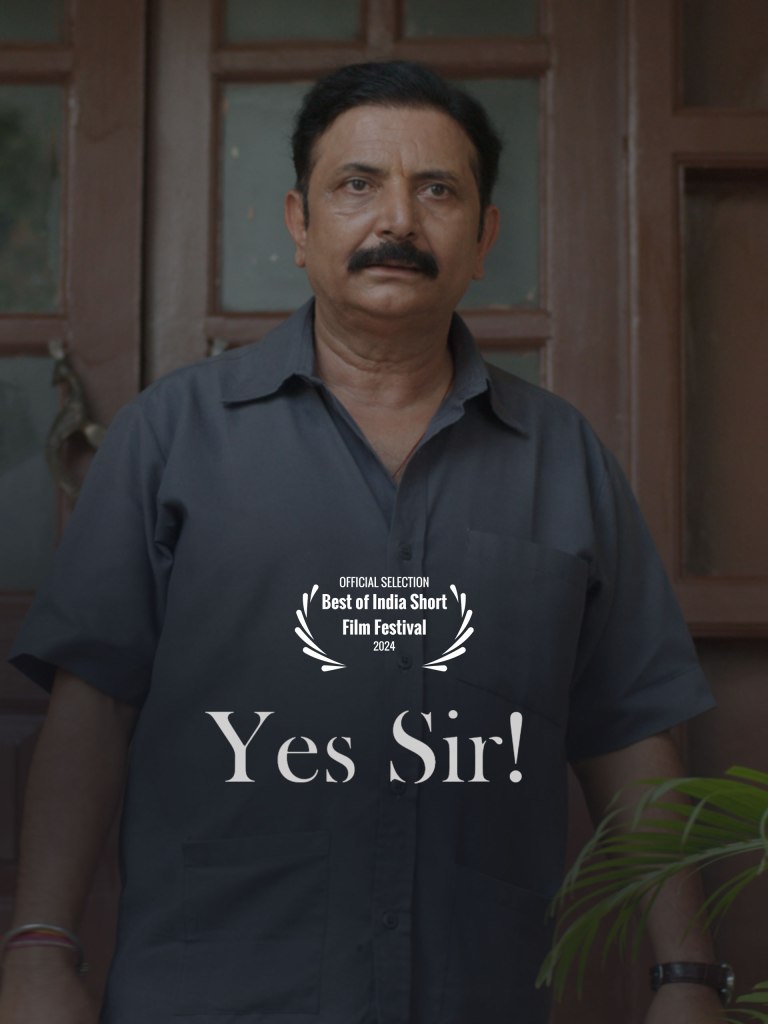
Joining Yes Sir as a Producer was a dream come true—an incredibly surreal experience that continues to make waves. In January 2025, Yes Sir won its 10th award for Best Story at the Waves International Short Film Festival in Goa. This marked the film’s 39th festival appearance. From its debut, Yes Sir has traveled the world, screening at some of the most prestigious film festivals and events globally.
Yes Sir on IMDB
Yes Sir trailer on Youtube
Although it has been featured extensively at various festivals and events, it is yet to be released theatrically. Hopefully, that will happen soon!!!
The purpose of this post is to share an insightful review from an aspiring filmmaker who watched Yes Sir on my laptop.

Yes Sir (2023) – A Powerful Commentary on Caste Bias Directed by Mudit Singhal
Through Yes Sir, director Mudit Singhal delivers a poignant and searing short film that sheds light on the deeply entrenched caste bias that continues to plague India. Through a simple yet impactful narrative, the film explores the dynamics of power, inequality, and the unspoken prejudices that define social interactions in a system rooted in hierarchy and discrimination.
The story follows the protagonist (Mukesh S Bhatt), a man from upper caste, working in an office environment where he interacts with his boss (Sonu Anand), a man from lower caste. While the film’s plot centers around a seemingly routine exchange between an employee and his superior, it quickly reveals the silent and systemic biases that shape the protagonist’s experience.
What stands out in Yes Sir is its ability to communicate complex social issues with satire, minimalism and precision. Singhal’s direction is subtle but effective; he doesn’t need to overtly spell out the caste dynamics at play. Instead, the film relies on small gestures, lingering glances, and unspoken interactions to convey the underlying tension that exists in every moment between the characters. This quiet yet persistent narrative style allows the audience to feel the weight of the protagonist’s predicament.
The performances are exceptional, particularly the lead actor, who masterfully conveys the emotional struggle of navigating a caste-biased society with subtle intensity. The nuances in his expressions—especially during moments when he’s expected to follow office protocol—speak volumes about the emotional burden caste bias imposes, not only on those from lower castes but also on individuals from upper castes when the roles are reversed. This tension stems from the deeply ingrained, outdated mindset that those from upper castes hold power, while those from lower castes are expected to comply and show deference.
Yes Sir doesn’t offer easy resolutions. Instead, it provides a reflection on the deeply ingrained systems of caste, showing how these biases often manifest in microaggressions that shape every interaction. The film does an excellent job of illustrating that caste bias is not always loud or obvious; it’s often insidious, quietly shaping behavior and expectations in ways that are both damaging and dehumanizing.
In a country like India, where caste continues to be a deeply divisive issue, Yes Sir is an important and timely film that encourages audiences to confront their own biases and the systems that perpetuate inequality. Its quiet power and incisive commentary make it a film that stays with you long after the credits roll.
Mudit Singhal’s Yes Sir is a must-watch for anyone interested in exploring the complexities of caste in modern-day India. With its masterful direction, compelling performances, and thought-provoking narrative, the film is an essential addition to the conversation about caste bias and the need for social change. The soundtrack, composed by Rajat Tiwari, is perfectly crafted and complements the film’s theme beautifully.
A big thank you to Kiran Sar for offering such thoughtful and detailed insights about Yes Sir!!!

Leave a comment