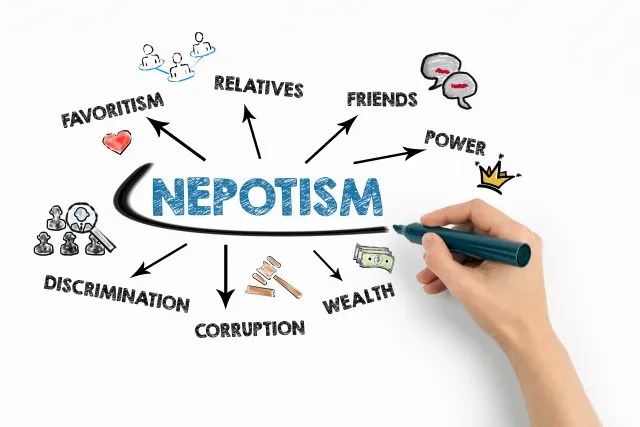
I recently had a discussion with a friend about nepotism — particularly in film, business, and politics. They argued that star kids or “nepo babies” actually have it more difficult because they must live up to higher expectations. While there might be some truth to that, the broader reality is far more complex and unequal.
Yes, nepotism kids may face scrutiny, but even if they fail as actors, business leaders, or politicians, they have powerful safety nets — their family’s wealth, fame, and connections. That privilege in itself is a massive advantage.
Compare that to the journey of someone like Nana Patekar, who grew up in poverty and once pasted posters on the streets of Mumbai to survive. Or Rajinikanth, who was a bus conductor before he became a superstar. Had they failed as actors, they would have been lost in the shadows of poverty — unnoticed and unsupported. Their backup options were limited or non-existent.
Take, for example, a world-renowned actor whose early career was marked by rejection. While his journey is often celebrated as a testament to perseverance, it’s worth noting that he is also the son of a celebrated poet and author. Even if acting hadn’t worked out, he had a legacy and network to fall back on. Likewise, another well-known actor’s struggle with a stammer is frequently highlighted as part of his success story. But he, too, is the son of a filmmaker. His path into the industry was not solely shaped by personal grit, but also by privileged access to mentors, opportunities, and a media narrative inclined to root for him.
And I don’t mean to single out just these two — there are many nepotism beneficiaries who have genuinely thrived and proven their talent. I have immense respect for both actors and their extraordinary skill as performers. Likewise, many successful actors have come from families of producers, directors, screenwriters, and distributors — and have gone on to set remarkable benchmarks in the field of acting.
Let’s look at “The Archies” movie — a perfect case study. It singlehandedly launched a lineup of star kids, some of whom might not have made it past a first audition if they didn’t carry last names like Kapoor or Khan. This kind of exposure — magazine covers, talk show appearances, prime projects — is a dream for outsiders.
Nepotism kids may or may not succeed based on talent, but they rarely disappear. Thanks to their networks, they keep getting opportunities. Meanwhile, an outsider may get one shot — and one failure is often enough to end their journey. The industry rarely forgives outsiders for flopping, while nepotism kids are offered chance after chance, under new banners, new directors, and new PR narratives. One notable case is that of Sushant Singh Rajput, who publicly criticized the film industry for its bias and exclusionary practices against him.
The same holds true for the children of industrialists and political dynasties around the world. They don’t start from scratch—they’re born into immense privilege, with doors opened for them long before they ever think to knock.
This isn’t to say that all privileged kids lack talent or that all outsiders are better — but the playing field is undeniably skewed. We must stop pretending it’s the same race for everyone. Because it isn’t.
Pic source – Pixabay

Leave a comment